
Background
During CPPW First Contract negotiations in 2024-2025, the Bargaining Team and the City agreed to create this committee and process as a way to improve and clarify the CPPW classifications. CPPW’s current classifications are problematic because they:
- Are overly broad, inconsistent, or inaccurate classifications
- Lack clarity, which led to confusion at all levels of City
- Lack clear career pathways or opportunities for advancement
- Are inconsistent – there are a few huge classifications representing people in wildly different work alongside tiny hyper-specific classifications.
Current status (April 2026)
The project is slowing down to accommodate reopener bargaining & core realignment/budget campaign. Nothing will happen without your engagement! CPPW anticipates holding an info session on the next steps of the project in May or June 2026. See Documents and updates section for more information.
Project Timeline & Milestones
What We Learned (July 2025-March 2026)
- Reminder, 2018: Reclassification by HR and outside consultants with virtually no engagement that led to current mess of a system.
- Early 2024: City of Portland hires Evergreen, a consultant to gather information from members and recommend new classifications. Evergreen Consultants paid $750,000 to develop this classification proposal.
- July 2024: Evergreen asks CPPW members to complete the Job Assessment Tool and answer questions about job duties.
- June 2025: CPPW receives suggested classification structure from Evergreen. The proposal is relatively unhelpful and did not create the strong foundation for this project that they promised. CPPW developed a Class Comp Committee to work with BHR to translate those recommendations into a new classification system to better define the work of union members.
- Sept-Dec 2025: Committee tried to work with consultant documents and structures, engagement with some members & managers, got significant feedback that the process and the products were not meeting the needs of the unit.
- Jan-Mar 2026: Pause & pivot from using outside consultant work to developing our own classification structure based on feedback from members & managers.
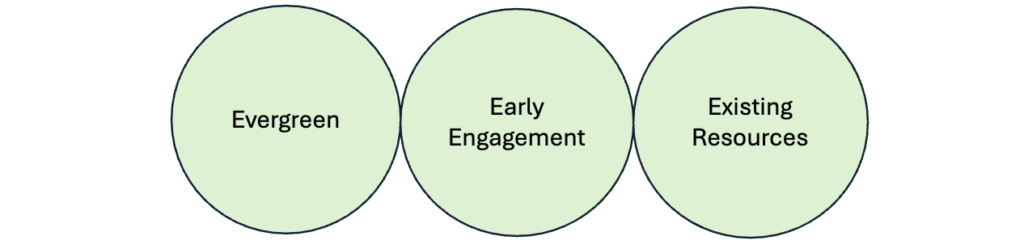
- Existing classifications represent a lot of complexity.
- Early proposal was missing clear definitions, distinctions, and was both overly simple and complex in unhelpful ways.
- Job families and subfamilies tell an important story that are a very helpful tool for analyzing jobs and doing the position mapping.
April 2026 until implementation
- Apr–Jun 2026: Internal buildout (frameworks, summaries, mapping/appeals design)
- Jul–Aug 2026: Targeted employee/manager validation (survey + outreach)
- Sep–Nov 2026: Focused working sessions to refine class specifications
- Dec 2026–Feb 2027: Draft finalization
- Mar–Jun 2027: Final adjustments and bargaining readiness
- July 2027: Potentially begin CPPW bargaining for contract that expires in Dec 2027, including bargaining the classification system and associated wage system.
- Jan 2028: Very likely, earliest date of implementation, post contract ratification.
Documents and updates
- April 2026: CPPW Class Comp update and FAQs
- February 2026: Slides from the Feb 2026 Class Comp Info Session. See the slides here
- December 2025: Evergreen Proposed Classifications (Only initial idea from external consultants, not current proposed or final)
- October 2025: Evergreen Study – Draft
- June 2025: Committee Position Description
- February 2025: Memorandum of Understanding establishing committee
CPPW Class comp representatives
Your class comp committee members (Aug 2025-April 2026):
- Evelyn Eayrs, Analyst II, BES
- Callista Robertson, Analyst II, Police
- Kari Koch, CPPW President, Coordinator II, PP&D
- Rachel Jamison, Analyst III, Water
Alternates:
- Anna Shook, Analyst II, Housing
- Ashly Hoffman, Analyst II, PBOT
- Elizabeth Lee, Analyst III, BES
- Mary Jaron Kelly, Coordinator I, Civic Life
- Meg Wren, Analyst I, BPS